
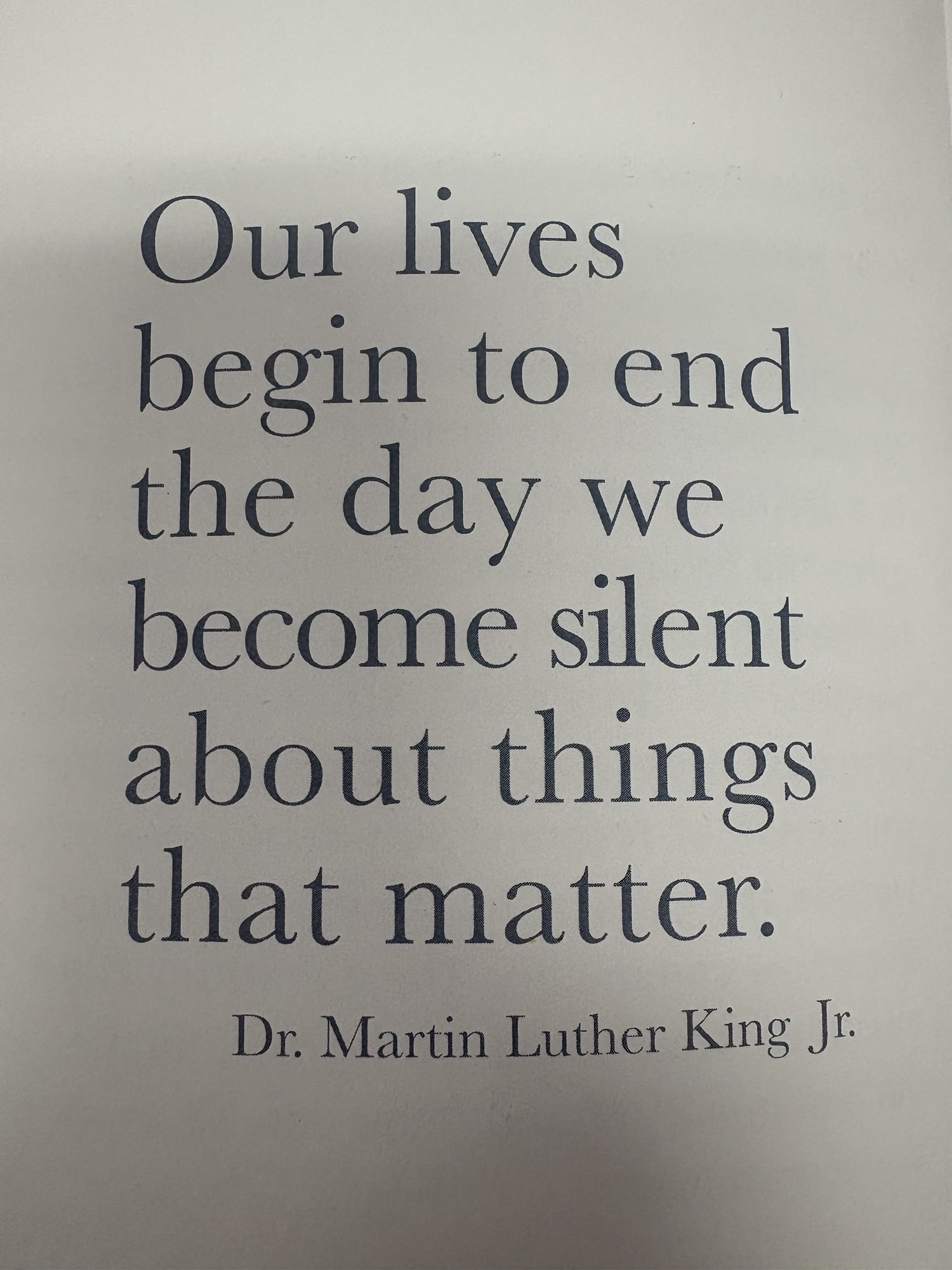
What’s one thing you know now that would have saved your younger self a lot of pain?
I used to think boundaries were walls. Something you built when you were angry enough, hurt enough, or finally tired enough to stop letting people in.
I imagined a door slammed shut, a number blocked, or a relationship ended. But I’m beginning to understand that boundaries are less about building walls around ourselves and more about learning where we end and another person begins.
That distinction sounds simple until you try to live it.
You can understand that a relationship is unhealthy, recognize the ways you’ve been diminished, and know that leaving was necessary, yet still miss the person you left.
You can know someone hurts you and still want to reach for them.
I’ve found myself in that uncomfortable space between knowing and wanting. Missing someone. Wanting reassurance that I mattered, that I haven’t been forgotten, that I was worthy of being chosen.
Sometimes I want to send the message anyway. Perhaps you know the feeling: the little negotiation with yourself. Maybe this time will be different. Maybe they’ll understand. Maybe if I explain myself a little better, they’ll finally hear what I’m trying to say.
But a boundary cannot depend on another person finally understanding us.
Sometimes it means accepting that we cannot persuade someone to love us in the way we need to be loved. Sometimes it means respecting another person’s boundary to be quiet, even when our own heart is still asking questions. And sometimes it means protecting ourselves from the cycle of reaching, hoping, hurting, and reaching again.
This doesn’t make the longing disappear. It simply asks us to stop making the longing responsible for our decisions.
Boundaries also have a physical dimension. They exist in our homes, our work, our creative spaces, and the places where we try to make something that belongs to us.
For an artist, creative work is rarely just an object sitting on a table. Sometimes it is the evidence of a thought we’ve been following, a feeling we’ve been trying to understand, or a small piece of ourselves we’re learning to express.
When someone changes it without permission, takes over the space around it, or treats our boundaries as inconveniences, the hurt can extend beyond the immediate event.
It can feel as though we have to fight to exist in our own lives.
And yet, I cannot spend my entire life guarding every inch of what belongs to me. I cannot make other people understand why something matters to me before I give myself permission to protect it.
I can say, This is mine. Please ask before changing it.
I can say, I need space to work.
I can decide what I will do if those requests are repeatedly ignored.
A boundary is not a demand that someone become a different person. It is an honest statement about what I can accept and what I will choose when I cannot.
The same applies to the smaller boundaries: declining a request, admitting a conversation has become exhausting, or offering my ideas, time, and creativity without agreeing to participate in everything someone else wants.
Why should saying no require an elaborate explanation?
I think many of us have learned to confuse being kind with being available. We want to be helpful, understanding, and accommodating. Somewhere along the way, we may begin treating our own discomfort as the price of maintaining a relationship.
But kindness without boundaries can become resentment.
Generosity without choice can become obligation.
And saying yes when we mean no doesn’t necessarily preserve a relationship. Sometimes it only postpones the moment when our frustration finally speaks for us.
I am learning that I can care about someone’s feelings without making myself responsible for preventing every disappointment they experience.
I can be compassionate without consenting. I can offer what I genuinely have to give without pretending I have more. And I can say no without writing a dissertation in my defense.
Perhaps the hardest boundaries to practice are the ones that involve ourselves.
I have to recognize when loneliness is making a decision for me. When rejection makes me want to prove my worth to someone who isn’t choosing me. When anger tempts me to say something that might provide a moment of relief but leave me with a different kind of hurt afterward.
I have to notice when I am reaching outside myself for reassurance that I could, slowly and imperfectly, learn to cultivate within.
That doesn’t mean I should never need anyone. We are relational creatures. We need connection, affection, friendship, and the experience of being seen.
It means that another person’s willingness to give me those things cannot be the sole measure of my worth.
I can miss someone and still leave them alone.
I can feel rejected without turning that feeling into a verdict on who I am.
I can be angry without making anger my ambassador.
I can acknowledge my mistakes without deciding that I deserve to be mistreated.
And I must remember that other people’s boundaries matter, too. Their no is not an invitation to negotiate indefinitely. Their distance is not necessarily a puzzle I am entitled to solve.
Their choices belong to them, just as mine belong to me.
There is a strange freedom in accepting that I cannot control another person’s response. I can only decide how I will participate.
I don’t want to become a person who is impossible to reach. I don’t want to mistake isolation for peace or defensiveness for strength. I don’t want to build such high walls that no one can find their way into my life.
I want intimacy. I want the kind of friendship where honesty is welcome, where differences don’t threaten the entire relationship, and where people can say difficult things without fear that everything will fall apart.
I want love that makes room for two or more whole people.
But closeness without respect is not the same thing as intimacy. Staying connected to someone at the cost of repeatedly abandoning myself is not proof of how deeply I can love.
Sometimes love means working through discomfort together.
Sometimes it means asking for something different.
And sometimes it means accepting that the relationship we want is not the relationship available to us.
That last one is particularly difficult because it offers no clever solution. No perfect wording. No final explanation that will make everything fall neatly into place.
Just grief. Acceptance. The next decision.
And then another.
I suspect I will be learning about boundaries for the rest of my life. I will probably say yes when I should have said no. I will sometimes react from stress or hurt before I’ve taken the time to understand it. I will occasionally reach for the familiar even when I know the familiar isn’t good for me.
The goal cannot be to become a person who never struggles.
The goal is to notice sooner.
To pause before sending the message.
To speak before resentment hardens.
To recognize when helping has become self-neglect.
To apologize when I have crossed someone else’s line, without using my apology as a way to demand forgiveness or continued access to their life.
To forgive myself for being human without using that humanity as an excuse to avoid accountability.
Maybe boundaries are not a single brave declaration. Maybe they are a collection of small decisions that gradually teach us how to live with ourselves.
I can be loving and still have limits.
I can be sorry and still have dignity.
I can be lonely and still choose not to return to what hurt me.
I can disappoint someone without being unkind.
And I can want to be chosen without spending my life trying to convince someone to choose me.
Boundaries aren’t about loving people less. They’re about learning not to abandon ourselves in the process of loving them.
Perhaps the art of drawing a line is not learning how to keep everyone out. It’s learning how to remain present in our own lives, even when someone else doesn’t understand, approve, or stay.
To make room for connection without surrendering ourselves to it.
To leave the door open to love, but stop standing in the doorway begging someone to come through.
And to understand, at last, that we are allowed to belong to ourselves.
Leave a Reply