
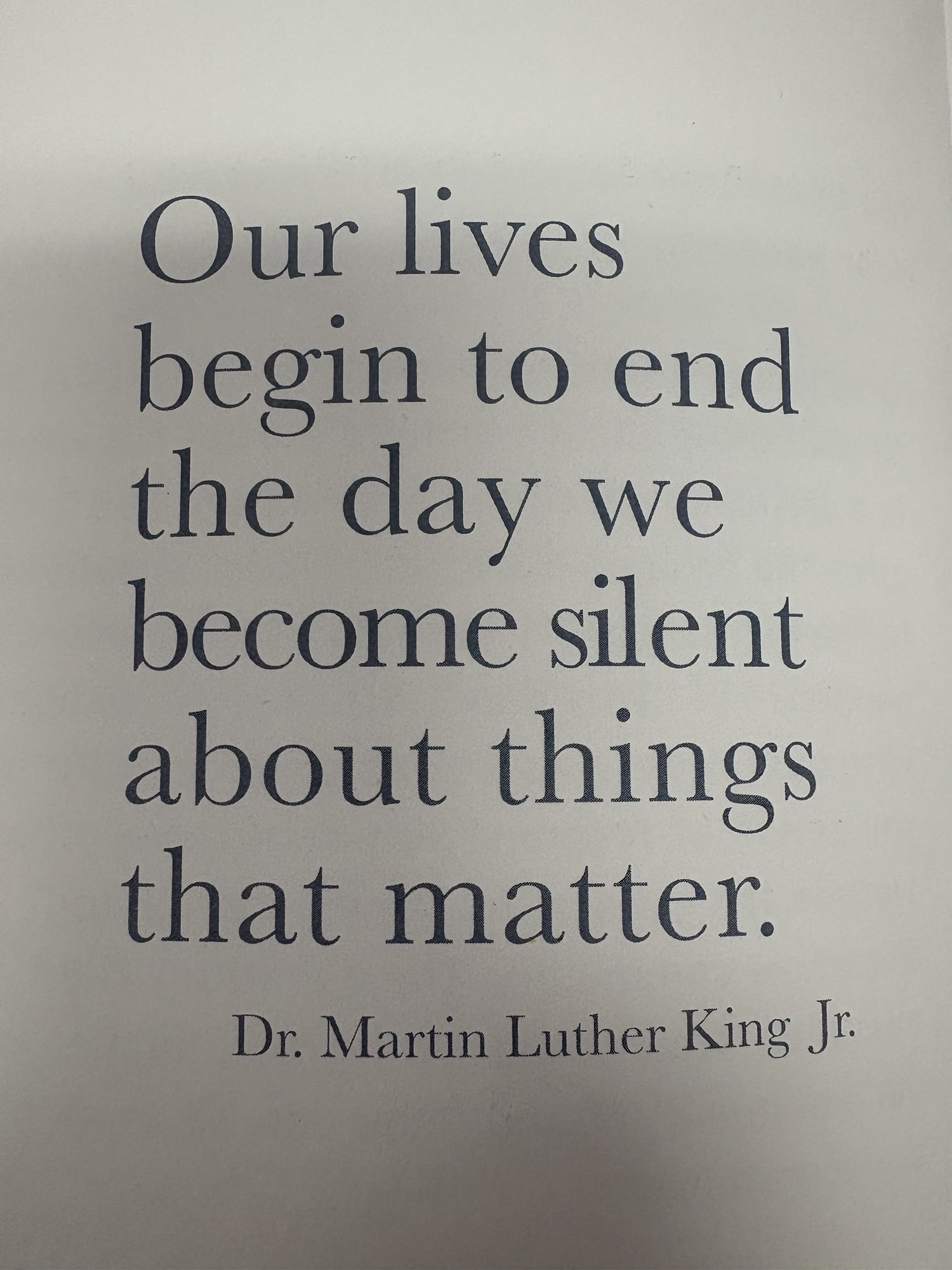
What’s one thing you know now that would have saved your younger self a lot of pain?
I used to think boundaries were walls.
Something you built when you were angry enough, hurt enough, or finally tired enough to stop letting people in.
I imagined that a boundary was a door slammed shut. A number blocked. A relationship ended. A declaration that someone had crossed a line one too many times.
And sometimes, perhaps, a boundary does look like that.
But I’m beginning to understand that boundaries are less about building walls around ourselves and more about learning where we end and another person begins.
That distinction sounds simple until you try to live it.
The people we don’t know how to let go
There is a particular kind of heartbreak that makes a person forget everything they know.
You can understand, intellectually, that a relationship is unhealthy. You can recognize the ways you were diminished, the moments you felt afraid, the times love became tangled up with control. You can know that leaving was necessary and still miss the person you left.
You can know someone hurts you – too often – and still want to reach for them.
I’ve found myself in that uncomfortable space between knowing and wanting. Missing someone. Wanting reassurance that I mattered, that I haven’t been forgotten, that I was worthy of being chosen. Wanting a few words from them to soothe the loneliness, even when I knew those words might never come.
Sometimes I want to send the message anyway.
Perhaps you know the feeling: the little negotiation with yourself. Maybe this time will be different. Maybe they’ll understand. Maybe if I explain myself a little better, they’ll finally hear what I’m trying to say.
But a boundary cannot depend on another person finally understanding us.
Sometimes the boundary is accepting that we cannot persuade someone to love us in the way we need to be loved. Sometimes it is respecting another person’s boundary to be quiet, even when our own heart is still asking questions. And sometimes it is protecting ourselves from the cycle of reaching, hoping, hurting, and reaching again.
This is not an easy lesson. It doesn’t make the longing disappear.
It simply asks us to stop making the longing responsible for our decisions.
When someone else’s life takes up your space
I’ve also learned that boundaries have a both a physical and mental dimension.
Physically they exist in our homes, in our work, in the places where we try to make something that belongs to us.
I’ve experienced what it feels like when personal space becomes negotiable, when creative projects are interfered with, when the things I’ve made or the space I’ve claimed seem to require defending.
For an artist, this can feel particularly intimate. Our work is not always just an object sitting on a table. Sometimes it is the evidence of a thought we’ve been following, a feeling we’ve been trying to understand, or a small piece of ourselves we are learning how to express.
When someone changes it without permission, takes over the space around it, or treats our boundaries as inconveniences, the hurt can extend beyond the immediate event.
It can feel as though we have to fight to exist in our own lives.
And yet, I cannot spend my entire life guarding every inch of what belongs to me. I cannot make other people understand why something matters to me before I give myself permission to protect it.
I can say, This is mine. Please ask before changing it.
I can say, I need space to work.
I can decide what I will do if those requests are repeatedly ignored.
A boundary is not a demand that someone become a different person. It is an honest statement about what I can accept and what I will choose when I cannot.
The uncomfortable business of saying no
There are other boundaries that seem so small they should be easy.
Declining a request. Admitting that a conversation has become exhausting. Telling a friend that I am happy to help with a project but not comfortable participating in every part of it.
I have found myself in situations where I was willing to offer my ideas, my time, or my creativity, but not willing to cross a personal line just because someone else wanted me to.
Why should that require an elaborate explanation?
Why does a no sometimes feel like an accusation, as though declining something means rejecting the person who asked?
I think many of us have learned to confuse being kind with being available.
We want to be helpful. We want to be understanding. We want people to feel comfortable around us. And somewhere along the way, we may begin treating our own discomfort as the price of maintaining a relationship.
But kindness without boundaries can become resentment.
Generosity without choice can become obligation.
And saying yes when we mean no doesn’t necessarily preserve a relationship. Sometimes it only postpones the moment when our frustration finally speaks for us.
I am learning that I can care about someone’s feelings without making myself responsible for preventing every disappointment they experience.
I can be compassionate without consenting.
I can offer what I genuinely have to give without pretending I have more.
And I can say no without writing a dissertation in my defense.
Boundaries with ourselves
This may be the hardest part to admit: not every boundary I need to practice involves another person changing their behavior.
Some involve me.
I have to recognize when loneliness is making a decision for me.
When rejection makes me want to prove my worth to someone who isn’t choosing me.
When anger tempts me to say something that will provide a moment of relief but leave me with a different kind of hurt afterward.
I have to notice when I am reaching outside myself for reassurance that I could, slowly and imperfectly, learn to cultivate within.
That doesn’t mean I should never need anyone. We are relational creatures. We need connection, affection, friendship, and the experience of being seen.
It means that another person’s willingness to give me those things cannot be the sole measure of my worth.
I can miss someone and still leave them alone.
I can feel rejected without turning that feeling into a verdict on who I am.
I can be angry without making anger my ambassador.
I can acknowledge my mistakes without deciding that I deserve to be mistreated.
These are not walls. They are small acts of responsibility toward myself.
And perhaps they are also acts of respect toward other people.
Because their boundaries matter, too. Their no is not an invitation to negotiate indefinitely. Their distance is not necessarily a puzzle I am entitled to solve. Their choices belong to them, just as mine belong to me.
There is a strange freedom in accepting that I cannot control another person’s response. I can only decide how I will participate.
The line between love and self-abandonment
I don’t want to become a person who is impossible to reach.
I don’t want to mistake isolation for peace or defensiveness for strength.
I don’t want to build such high walls that no one can find their way into my life.
I want intimacy. I want the kind of friendship where honesty is welcome, where differences don’t threaten the entire relationship, where people can say difficult things without fear that everything will fall apart.
I want love that makes room for two or more whole people.
And I am beginning to understand that closeness without respect is not the same thing as intimacy. Staying connected to someone at the cost of repeatedly abandoning myself is not proof of how deeply I can love.
Sometimes love means working through discomfort together.
Sometimes it means asking for something different.
And sometimes it means accepting that the relationship we want is not the relationship available to us.
That last one is particularly difficult because it offers no clever solution. No perfect wording. No final explanation that will make everything fall neatly into place.
Just grief. Acceptance. The next decision.
And then another.
A practice, not a performance
I suspect I will be learning about boundaries for the rest of my life.
I will probably say yes when I should have said no. I will sometimes react from stress or hurt before I have taken the time to understand it. I will occasionally reach for the familiar even when I know the familiar isn’t good for me.
The goal cannot be to become a person who never struggles.
The goal is to notice sooner.
To pause before sending the message.
To speak before resentment hardens.
To recognize when helping has become self-neglect.
To apologize when I have crossed someone else’s line, without using my apology as a way to demand forgiveness or continued access to their life.
To forgive myself for being human without using that humanity as an excuse to avoid accountability.
Maybe boundaries are not a single brave declaration. Maybe they are a collection of small decisions that gradually teach us how to live with ourselves.
I can be loving and still have limits.
I can be sorry and still have dignity.
I can be lonely and still choose not to return to what hurt me.
I can disappoint someone without being unkind.
And I can want to be chosen without spending my life trying to convince someone to choose me.
Perhaps the art of drawing a line is not learning how to keep everyone out. It’s learning how to remain present in our own lives, even when someone else doesn’t understand, approve, or stay.
To make room for connection without surrendering ourselves to it.
To leave the door open to love, but stop standing in the doorway begging someone to come through.
And to understand, at last, that we are allowed to belong to ourselves.
Leave a Reply